Installing Vst Plugins In Audacity
This page lists all Nyquist plug-ins for Audacity that are available as separate downloads. Nyquist plug-ins support Windows, Mac and Linux/Unix. Click any 'Downloads' link to jump to the downloads page for that plug-in category.
|
Contents
Downloading or viewing plug-ins
VST Plugins is one of the best plugins for Audacity. It runs within a digital workstation to enable effects and provide additional features to audio editing software. VST comes with virtual instruments that simulate the characteristics of the original tool. On Mac, the easiest folder to put the plug-in's VST file in is /Library/Application Support/audacity/Plug-Ins. Then use Effect Add / Remove Plug-ins. To enable the VST effects and load them into Audacity, For details see Manage Effects. For detailed instructions on installing VST plug-ins for Audacity see: Windows, Mac or Linux.
- Download the plug-in:
- Left-click the download link to download the file in almost all web browsers. If this only displays the plug-in code, right-click the download link and select 'Save Link As..', Save As..' or some similar 'Save' or 'Download' command. For further information, please see the documentation for your web browser.
- View the plug-in code:
- Chrome: Download any plug-in once, then right-click over the download button at the bottom of the browser and choose 'Always open this file type'.
- Firefox: Open Options or Preferences, then click the 'General' section at the top. In the 'Downloads' section, choose 'Always ask me where to save files'. When you click the download link, you now have an extra option to open the file in a chosen application instead of save it.
- Internet Explorer or Microsoft Edge: Right-click the download link, choose any of the 'Open' options then in the box that appears, click the 'Open' button. In Edge, this also downloads the file.
- Safari: Downloaded plug-ins will automatically open in your default text editor after download. You can disable automatic open after download in Safari Preferences.
Installing Vst Plugins In Audacity Download
Installing plug-ins
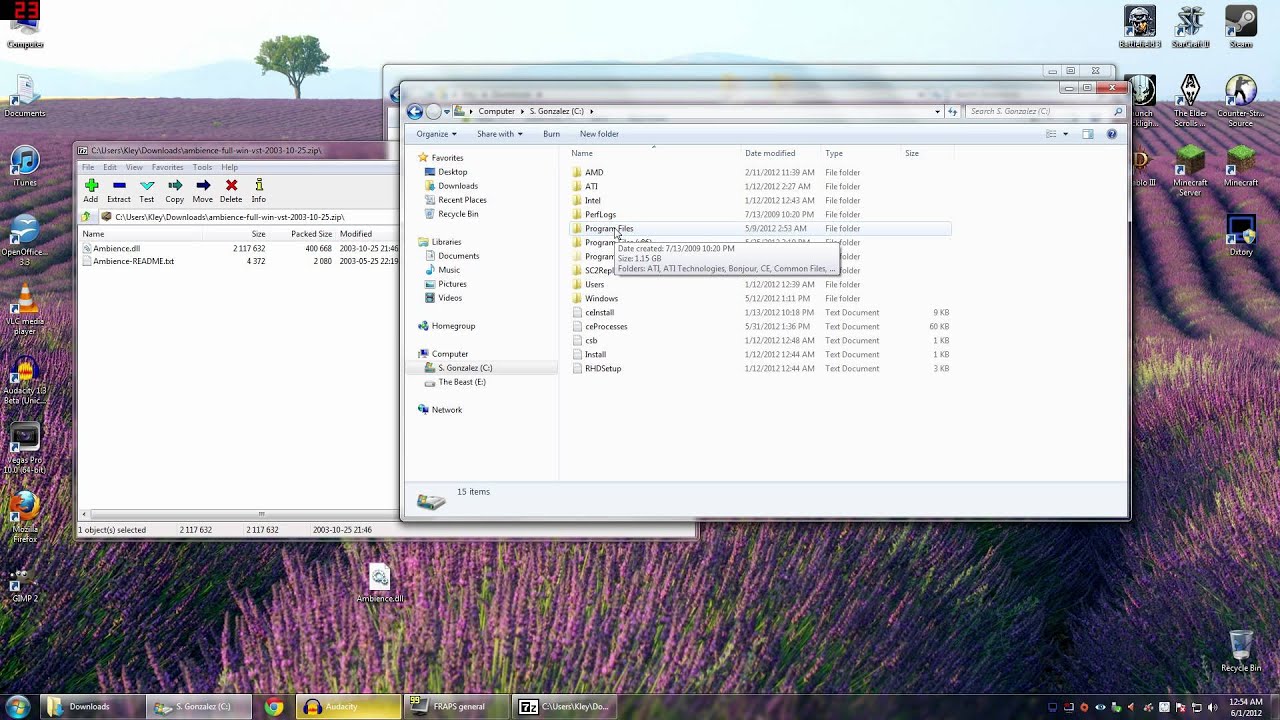
- To open the directory for Audacity, just go to the Program Files on your computer, find Audacity and locate the Plugins folder. Paste the copied file inside the plugins folder to add the plugins to the library. Open the Audacity and click on Effects, the plugins will appear in that tab.
- Audacity - How to Install and Use VST Effect PluginsDownload Audacity here: ReaPlugs VST here: http://reaper.f.
- On Windows and Mac OS X, Audacity is a 32-bit application so won't see 64-bit versions of VST plug-ins, even on 64-bit operating systems.; On GNU/Linux, 32-bit systems will have 32-bit versions of Audacity which won't see 64-bit VST plug-ins. 64-bit systems will have 64-bit versions of Audacity which will see 64-bit VST plug-ins but won't see 32-bit plug-ins.
- VST (Virtual Studio Technology): Audacity supports almost all VST effect plug-ins on Windows, Mac and Linux including 'shell' VST's that host multiple VST effects. LV2 is a more advanced evolution of the LADSPA plug-in architecture which was originally developed on Linux.
Audacity 2.3.2
To install Nyquist plug-ins in Audacity 2.3.2 or later, please follow the instructions in the Audacity manual:
Older versions of Audacity
To install a Nyquist plug-in, place its '.NY' file in the Audacity 'Plug-ins' folder. In Audacity 2.1.1 or later, use Effect > Manage.. or Effect > Add / Remove Plug-Ins.. to open the Effect Manager. Select the plug-in(s) you want to install, then click and .
- On Windows the 'Plug-Ins' folder is in: Users<username>AppDataRoamingaudacityPlug-Ins
- On Mac place them in Audacity's 'Plug-Ins' folder at ~/Library/Application Support/audacity/Plug-Ins.
- On Linux, create a directory called .audacity-files in your home folder and then create a plug-ins folder inside that. Copy (or move) the downloaded plug-in into the 'plug-ins' folder. Alternatively, plug-ins may be installed system wide by placing them in usr/share/audacity if you installed an Audacity package supplied by your distribution, or usr/local/share/audacity if you compiled Audacity from source code.
Compatibility
These plug-ins were contributed over many years, and many versions of Audacity. In the vast majority of cases, old plug-ins should continue to work in more recent versions of Audacity. More recent Nyquist effects may not install in old versions of Audacity or may not work correctly.
| It is highly recommended to use the latest release version of Audacity, which is available via the Audacity website. |
List of available plug-ins
Feedback and bug reports:
|
Generate plug-in downloads
These plug-ins usually appear towards the bottom of the Generate menu in Audacity.
- Tone Generators
- Noise Generators
- Special Effects
- Instruments
- Sequence Generators
- Generator Utilities
Effect plug-in downloads
Install Vst Plugins In Audacity
These plug-ins usually appear towards the bottom of the Effect menu in Audacity.
- Amplify, Mix and Pan Effects
- Delay and Reverb
- Distortion Effects
- Dynamics Processing
- Filters
- Modulation Effects
- Sequencer Effects
- Time, Pitch and Tempo
Analyze plug-in downloads
These plug-ins usually appear towards the bottom of the Analyze menu in Audacity.
- All plug-ins
Nyquist plug-ins shipped with current Audacity
The following 26 Nyquist plug-ins are shipped with the current Audacity version. You can read about what each plug-in does on Index of Effects, Generators and Analyzers in the Audacity Manual.
|
|
Plug-in authors
These plug-ins have been contributed by:
- Steve Daulton
- Edgar Franke
- Steven Jones
- Paul Licameli
- Jvo Studer
- Will McCown.
Related articles
- Ask questions in the Audacity Nyquist Forum
- Test-drive new Nyquist Plug-ins that are still under development
- Other pages in our Plug-ins category
Links
Jul 09,2019 • Filed to: Record Audio • Proven solutions
What is the best Audacity plugin? Are there any better alternative for Audacity ?
Audacity is open source software that is absolutely free to download and install. This software is compatible with Windows, Mac, Linux and several other platforms. This is not only a great sound editor, but a audio recorder as well. This software is sometimes limited in certain cases, but they can be overcome with the help of a lot of Audacity plugins that are available for download absolutely free. Several Audacity plugins, like LADSPA Plugin, LV2 Plugin, Nyquist Plugin, VST Plugin, Audio Unit Plugin, and Module Plugin are available to amplify the performance of Audacity. The above mentioned Audacity plugins have been used by several people and are very popular.
Part 1. Best Audacity Alternative to Record Music from Any Sites
iMusic is a recommended music downloader, recorder and powerful tool to manage music. With iMusic, you can easily record music or any playing audio in your Mac or Windows PC with its well-balanced audio recorder. Further more, you can directly download hot music tracks from 3000+ sites like YouTube, Pandora, Spotify, etc. Let's have a quick glance at iMusic's outstanding features.
iMusic - Best Alternative for Audacity You Deserve to Own

- Built-in music library to discover hot music track, artist, or playlist.
- Download music tracks from 3000+ music sites like Pandora, YouTube, Spotify, SoundCloud, etc.
- Record music or any audio played on your Windows PC or Mac with a well balanced recorder.
- Transfer music between iDevices and Android, from PC to mobile devices or vice versa.
- Help rebuild, repair or backup iTunes Library on Mac, even in a PC Windows computer.
- Powerful music toolbox which helps to transfer music to usb, burn cd, etc.
Why Choose This Audacity Alternative
- The most important feature is its ability to play as well as record songs automatically. Whenever a person is viewing a YouTube video or listening to some music of choice, the only thing the person needs to do to get the song is just press the 'Download' or 'Record' button. There can be nothing more easily done than this. The files will get saved in either the MP3 or M4A format. It automatically gets rid of the advertisements in between the tracks. The recording is a continuous procedure unless it is stopped. The settings can be adjusted in such a manner that the advertisements get filtered out automatically and the tracks are also split in an automatic fashion.
- Original sound quality is maintained by the use of a virtual sound card that captures the recorded audio and saves them in either MP3 or M4A format. The quality of the sound is customizable. It can be anything from low to high quality. This software helps to record anything that plays on Mac and save them for hearing later.
- The third feature is something of a specialty. It helps to identify the artist, title of the song, albums etc. with ease. This is done with the help of ID3 tag identification technology. This is really a ground breaking technology that gives user an unforgettable experience. This technology helps to fetch information about the music being played, from the internet.
- This software allows a person to download and store unlimited amount of music. If a person is interested in hearing music from several radio stations around the globe, then this is the best software. More than 500 radio stations are present for the person to select his or her favorite music.
Steps to Record Music by Audacity Alternative
Step 1: Download iMusic on your desktop, navigate to 'Download' interface, then find the 'Record' button.
Step 2: Go to a streaming music site to choose your favorite songs and play it . At the same time, click the 'Record 'button to start the recording process.
Step 3: After the recording process finished, you could find your recorded songs on iTunes library.
LADSPA Plugin
This is one plug-in that is mostly in use for Linux based machines. The full form of LADSPA is Linux Audio Developer's Simple Plug-in API. Audacity has got in built support for all the LADSPA Plugin. This is an API that is used for audio filtering and audio signal processing purpose. Although this API was initially developed to work on Linux platform only, but later on, it was adjusted to work on several other platforms as well. Numerous audio LADSPA Plugin are available for free to download and use as per the requirement of the user. ladspa-sdk-1.12-1.i386.rpm [7.3 8.0 9], ladspa-sdk-example-plugins-1.12-1.i386.rpm [7.3 8.0 9], ladspa-sdk-1.12-1.src.rpm [all], ladspa-sdk-1.12-1 [fc1], ladspa-sdk-example-plugins-1.12-1 [fc1], ladspa-sdk-1.12-1 source [all], are some of the LADSPA Plugin available for use to increase the RPM.
LV2 Plugin
This is actually an upgraded version of LADSPA. Audacity has in-built support for the LV2 Plugin as well. This plug-in is mostly built for Linux based machines, but Audacity is open ended software that supports LV2 for all kinds of operating platform. This is a great option for all Audacity users. For installing the plugin of LV2, a person needs to place the plugin in the system LV2 locator and then restart Audacity. The plugin actually support the generation and processing of all audio files that are run through Audacity. LV2 is actually replacing the older LADSPA plug-in which is a bit limited performance wise. LV2 has got MIDI (Musical Instrument Digital Interface) facility and that is missing in LADSPA plug-in. LV2 Plugin can almost behave like instruments, and this is missing in LADSPA. The most common LV2 Plugin include a delay, an equalizer, a compressor and a reverb. These are just some of the basic LV2 Plugin.
Nyquist Plugin
Audacity does have built-in support for Nyquist Plugin as well. It is always possible for a user to download more Nyquist Plugin or program more Nyquist Plugin as per the need of the user by using Nyquist programming language. Audacity does not limit the use of this plug-in to a specific platform, but it can be used in any platform that is running Audacity. For the Audacity audio editor, the Nyquist Plugin actually fulfill the purpose of analyzing the job.
VST Plugin
Audacity can load VST effects on all the operating systems like Windows, Linux and Mac, but it cannot load the VST instruments. In this case, there is no need for the VST enabler at all. The plugin of VST effects are found in several websites like Hitsquad: Windows, Mac, KVR Audio: Windows, Mac, Open Directory (Windows, Mac). VST Plugin while working in tandem with Audacity makes editing and mixing of sounds very easy and the final output is really awesome. This plug-in is very high quality sound effecting modules, and they are far better than those that come inbuilt with Audacity. So people that need very high sound mixing quality or need the editing of sounds to be perfect favor the VST Plugin. The plug-in includes noise reducers, sound compressors, sound enhancers and several other important sound editing options.
Audio Unit Plugin
This is another great set of plug-in that goes well with Audacity and it only works on Mac platform. A system plug-in directory is the place from where Audacity loads this plug-in. Each time a new Audacity is installed in a machine, it will not automatically recognize the already existing audio units within the system. It has to be enabled from the plug-in manager of Audacity. Similar to the VST Plugin, the Audio Units display their full range of GUI interface. There are some limitations of this Plug-in as far as display is concerned. It does not always display the full range of bands selected, as it cannot resize itself automatically. The go around strategy involves selecting the number of bands and then closing it. After closing as soon as it is re opened, all bands fit in smoothly.
Module Plugin
Some new features can be added to Audacity using experimental modules. To load modules into Audacity requires a person to follow certain steps. The first requirement is to add the 'Modules' folder within the installation folder of Audacity. The second step involves adding the files like mod-nyq-bench.dll (Windows) or mod-nyq-bench.so (Mac OS X) in the folder 'Modules'. Then, the person must resort to restarting Audacity and opening the 'Modules preferences'. It can be seen that the file is showing as new, and this means that no choice or preference has been made yet. Now the person has to click the drop down and shift it to 'Enabled'. After changing, the person needs to pres 'OK' and then restart Audacity. As soon as Audacity restarts, a person can see the different modules to work on as per his or her preference.