Vst Plugins File Location
I assume this is the VST. I have tried changing the VST folder in Ableton to “C: Program Files Elektron Overbridge”. I have tried moving the.dll files to my regular VST folder. I have rescanned all plugins, and restarted ableton, and restarted the computer, several times, but it still does not show the plugins inside Ableton Live? C:.YOUR 32-BIT PLUGIN FOLDER. Diva.dll; Note: The location of your VST2 plug-in folders depends on where you installed the DLL files. It will usually be in the same folder as all your other VST2 effects and instruments. If you have never specified a custom path for plug-ins, the default location for 64-bit plug-ins should be: C: Program Files.
As shown some time ago for the Mac, today’s tip shows you how to organize your plug-ins on windows, in order to find and load them quicklyEve online launcher download mac. into Blue Cat’s PatchWork or MB-7 Mixer.
Vst Plugins File Locations
- Under 'Preferences', select the 'File Folder' menu. Click the 'Browse' button next to 'VST Plug-In Custom Folder'. Select the folder you would like Ableton to use for VST Plug-Ins. Confirm that the 'Use VST Plug-In Custom Folder' option is turned on, and the file path listed under 'VST Plug-In Custom Folder' leads to the folder you just selected.
- A VST 3 Plug-in should be installed at specific folder location, the following tables specify these predefined locations for different operating system. VST 3 doesn't require a Plug-in registration like it is used with DirectX. Links, Symbolic links or Shortcuts could be used from these predefined folders. 3 levels of folder location are defined.
As you will see, It’s no rocket science, and this will greatly improve your experience and reduce the time to load your plug-ins.
Spending Too Much Time Looking For Plug-Ins?
Some people have been asking for the capability to load the plug-ins directly from the menu instead of having to open an Explorer Window. While this may be added in the future to our software, be aware that it may never beat what you can already do today with the Windows Explorer or Finder, as you will see below…
How To
On Windows, whatever you do, your VST plug-ins folder will probably quickly look like a huge mess, unfortunately… Best vst plugins for vocal under 30.
There is however a very simple way to overcome this issue and organize your plug-ins properly: it will just take you a few minutes!
To quickly access your plug-ins, without modifying the original install locations (for optimal compatibility), just do the following:
1. Create a new folder somewhere convenient on your system. For example in the ” My Documents” directory.
2. Label the new folder as “Plug-ins”.
3. Drag it into your Sidebar Favorites section to make it available as a shortcut there.
4. Go to your VST plug-ins folder.
5. Right click on each plugin you want and choose “Create shortcut” (multi-selection works too).
6. Move these shortcuts to your new folder, and create sub-folders to organize them.
Here you go! You can now access plug-ins quickly using the shortcuts, inside the appropriate folders:
Yamaha grand piano vst plugin. VST Plug-Ins organized into subfolders, directly accessible from the Favorites Sidebar
Additional Tip: You can also choose to add several folders to the favorite bar instead of a single one, to access directly the mostly used plug-ins that you use most of the time.
One More Tip: It is possible to add a shortcut to the same plug-in in different folders, as it may be valid for several categories.
Not Fancy Enough? Add Some Icons!
Once you have properly organized the plug-ins thanks to shortcuts and linked to them from the favorites bar, you may want to add some colors to it and change the icons. You can set a different icon for each folder, and even for each plug-in:
Plug-Ins Folders with Custom Icons
With custom icons, it is even easier to find the plug-ins: a glance will suffice to pickup the right one!

Free Search Included!
And one more thing… Did you know that you can then use the standard windows search feature to find the plug-ins? Just type in a name and you’ll get it instantly!
VST Plug-In Search Included !
Conclusion
Simply using the Windows Explorer properly and taking the time to organize things will greatly improve the plug-in loading experience. There are even features that are not available in most host applications (how many do provide custom icons and search?).
Do you still need an included plug-in menu? Please discuss below!
UPDATE: Both problems solved.I got AmpliTube 4 to work in standalone mode by removing version 4.03 and installing version 4.02 in it's place.
To get Amplitube 4 working as a plug-in, the two files you need to copy into your host plug-ins folder are:
1. C:Program FilesVstPlugInsAmpliTube 4 .dll
2. C:Program FilesCommon FilesAmpliTube 4.vst3
I can't swear to it, but I don't recall seeing the file referred to in 1. on my file system until after I removed v4.03 and replaced it v4.02.
Anyhow, update posted in the even it might help someone else.
ORIGINAL PROBLEM STATEMENT:
I'm trying to use AmpliTube 4 and Fender bundle (licensed) on Windows 10. Can someone please tell me exactly what AmpliTube file(s) I need to copy into my host plug-ins folder to use the plug-in and where on the Windows 10 file system I might find them?
So far, I have managed to bring Mobius 2 via JBridge and Cubase Groove Agent 4 VST's into my custom plug-ins folder on Ableton Live 9 (64-bit) and Ableton sees them no problem so I obviously understand the process in general and Ableton is not the problem, but for the life of me I cannot figure out what AmpliTube 4 files I'm supposed to be dropping in my plugins folder.
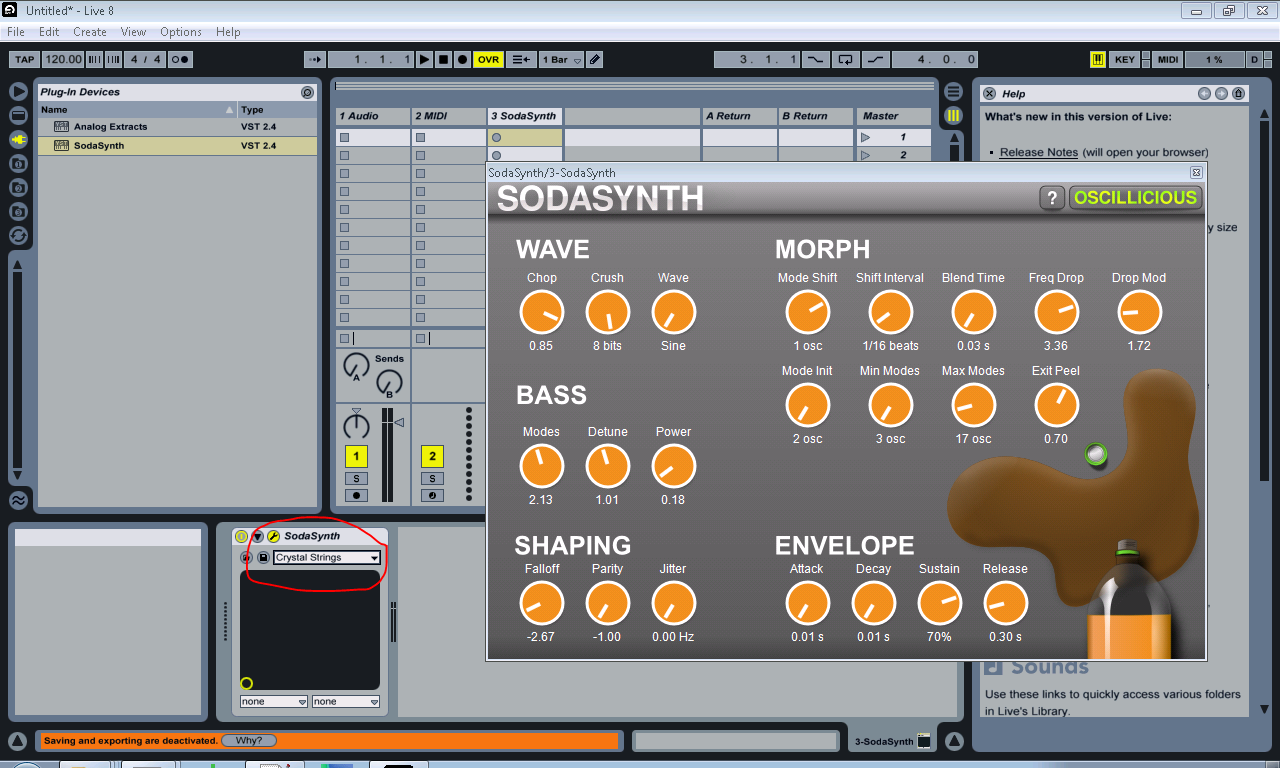 As an aside, Amplitube 4 standalone stubbornly refuses to use the native ASIO driver of my Steinberg UR44 interface. Standalone Cubase Groove Agent 4 and Positive Grid Bias FX have no problems in that regard.
So, as it stands, I can't use AmpliTube 4 at all. Not in standalone mode because it refuses to use my audio interface's native ASIO driver and not as a VST plugin because I can't find the right files to drop in my host plugins folder.
My primary concern right now is getting Amplitube 4 to work as a VST plug-in, so can someone please tell me which AmpliTube VST-related files I need to be looking for?